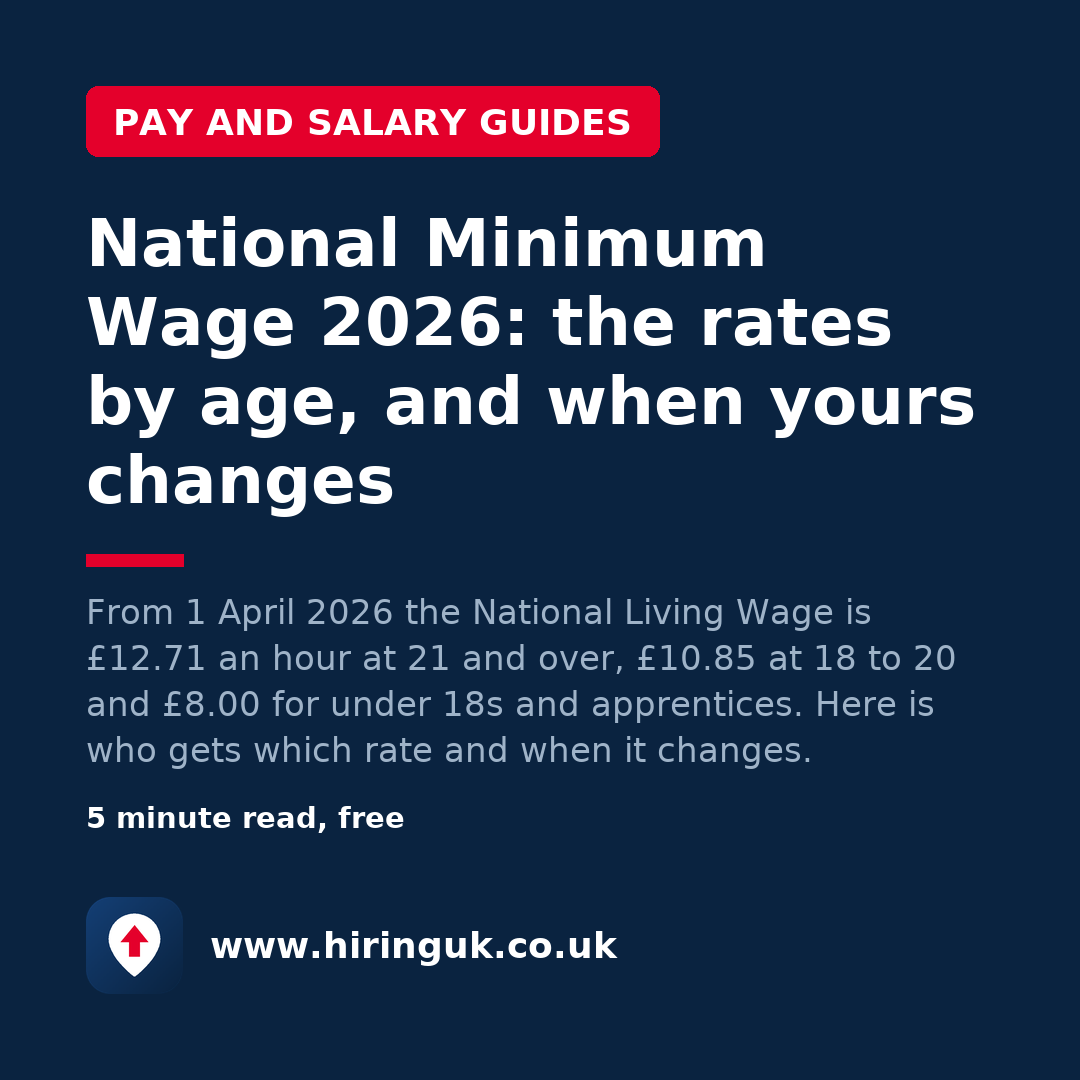
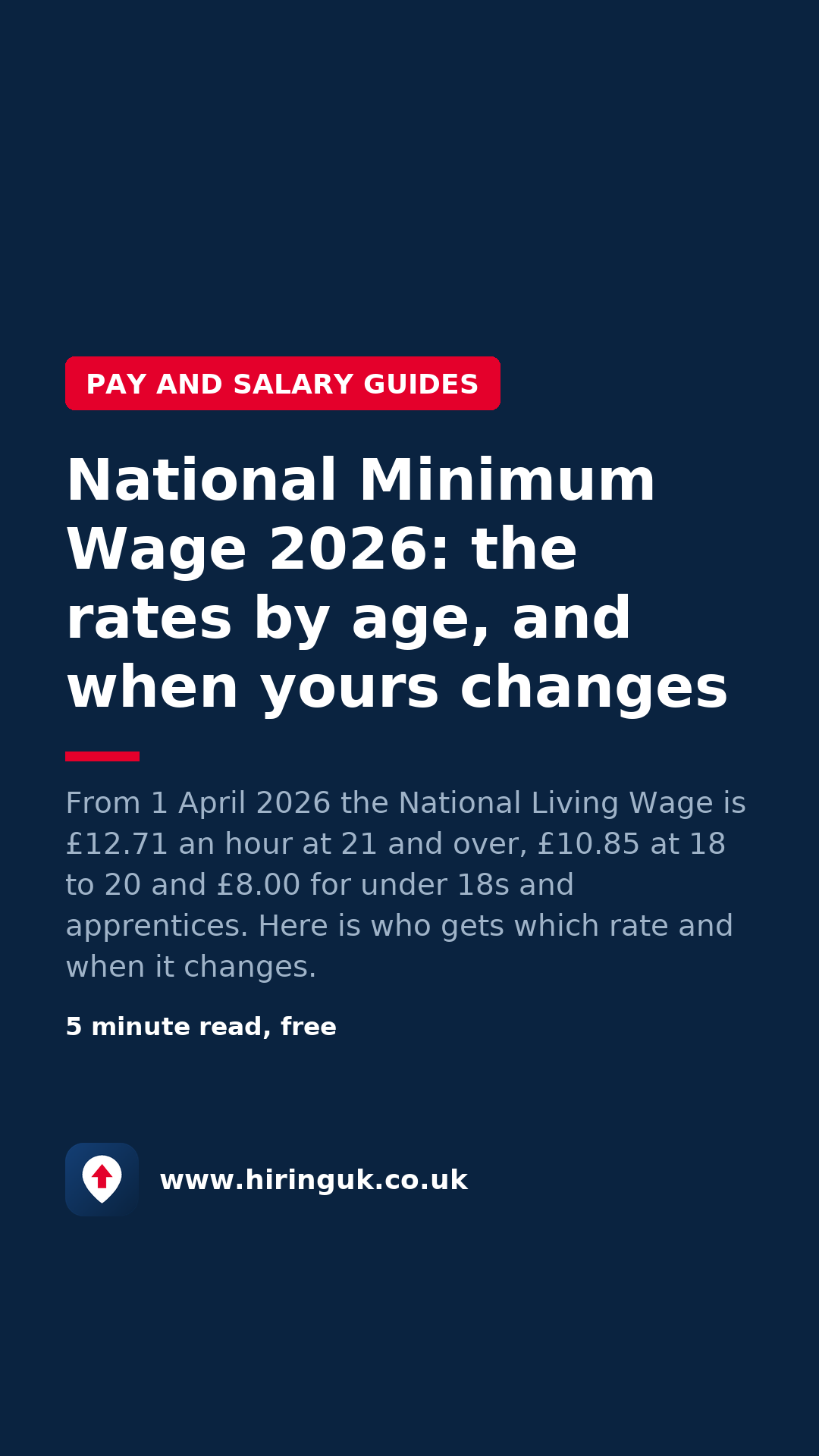
National Minimum Wage 2026: the rates by age, and when yours changes
5 minute read · 2026-10-08
From 1 April 2026 the lowest legal hourly pay in the UK is £12.71 an hour if you are 21 or over (the National Living Wage), £10.85 if you are 18 to 20, and £8.00 if you are under 18 or an apprentice in the circumstances below. These rates apply in England, Scotland, Wales and Northern Ireland alike, for every worker, whether full time, part time, agency, casual or on a zero hours contract.
The 2026 rates in one table
| Who | From 1 April 2026 | Before (April 2025 to March 2026) |
|---|---|---|
| 21 and over (National Living Wage) | £12.71 | £12.21 |
| 18 to 20 | £10.85 | £10.00 |
| Under 18 (above school leaving age) | £8.00 | £7.55 |
| Apprentice rate | £8.00 | £7.55 |
The official figures are on GOV.UK: National Minimum Wage and National Living Wage rates. The rates normally change every April, so check that page each spring rather than relying on a figure you remember.
Who gets the apprentice rate
The apprentice rate is for apprentices aged under 19, and for apprentices aged 19 or over in the first year of their apprenticeship. Once an apprentice is 19 or over and has finished that first year, they must be paid at least the rate for their age. A 22 year old in the second year of an apprenticeship is therefore owed at least £12.71 an hour, not £8.00. Employers often miss this, and it is one of the commonest underpayments found by enforcement officers.
When your rate changes after a birthday
The higher rate starts from the beginning of the next pay reference period after your birthday, not on the day itself. If you are paid weekly and turn 21 on a Wednesday, the new rate applies from the start of your next pay week. If you are paid monthly, it applies from the next monthly pay period.
What counts as working time
The minimum wage is worked out on the average hourly pay across each pay period, for the time you actually work. That includes more than people think:
- time spent training that the employer requires, including online modules done at home
- travel between jobs or assignments during the working day (care visits are the usual example), though not your normal commute to and from work
- time you are required to be at work and available, such as waiting for a delivery or a lift to arrive, even if there is nothing to do
- security checks, putting on special protective kit and handover time, where the employer requires them
Sleep in shifts are a special case: generally only time spent awake for the purpose of working counts. If you think unpaid time is pulling your average below the legal rate, this guide shows how to work it out.
What does not count towards the minimum
Some money on your payslip is ignored when checking the minimum wage. The extra part of an overtime or shift premium does not count, nor do tips, most allowances that are not consolidated into pay, or expenses. And money the employer takes back for things connected with the job, such as a uniform you must buy, reduces your pay for minimum wage purposes. We cover that in deductions and the minimum wage.
National Living Wage or real Living Wage?
They are different. The National Living Wage (£12.71) is the legal minimum. The real Living Wage is a voluntary rate set by the Living Wage Foundation from the cost of living: £13.45 across the UK and £14.80 in London for 2025 to 2026, with the next rates due to be announced on 15 October 2026. Employers who sign up pay it by choice; nobody is legally required to.
What to do next
- Compare your hourly rate, and your age, with the table above. Then check the hours on your payslip match the hours you worked: our payslip guide goes line by line.
- Read our longer guide, National Minimum Wage, the National Living Wage and your payslip.
- See what jobs actually pay above the minimum on what the work pays, built from adverts that must state the pay.
This is general information, not legal advice. For your own situation, ACAS (0300 123 1100) is free.
Found it useful? Press the button, or send it to somebody it would help.